The growing cancer inside cancer research literature
By Baptiste Scancar
February 5, 2026
Cancer, this insidious disease where your own cells hijack themselves and turn toward self-destruction. Ironically, cancer research may be hosting a cancer of its own — fraudulent studies that grow and multiply much faster than authentic ones.
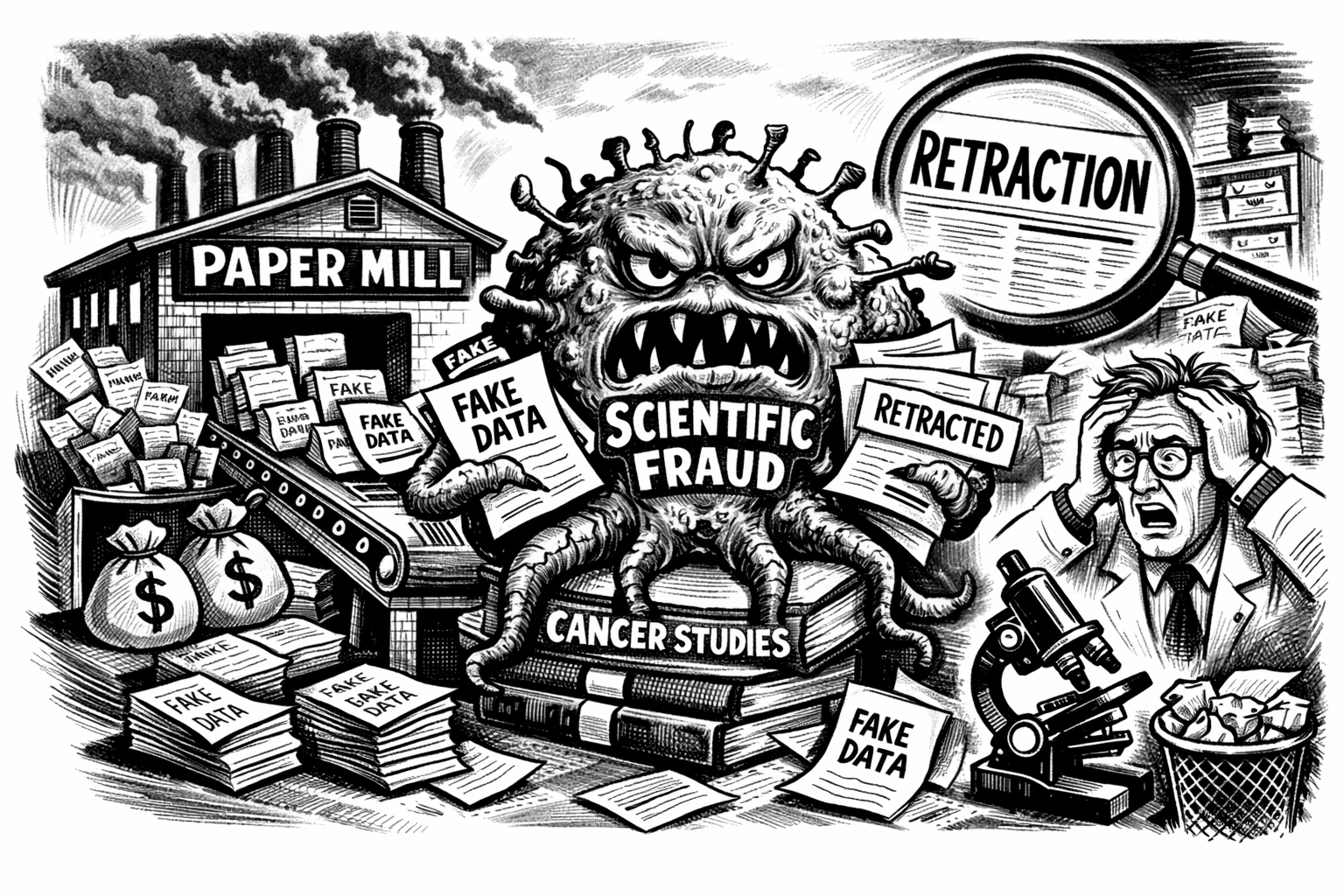
AI-generated image (Dall-E)
Why cancer? If you’re going to commit fraud, at least pick something safer. Mathematics has enough infinite spaces and plenty of undefined parameters — enough room to hide, mess things up, and never be found. However, it is cancer research — and especially its molecular research component — that is flooded with fraud. And in this case, it’s not the same game; they’re playing with people’s lives. Fabricating medical research means wasting funding and time, misleading researchers, and slowing scientific progress. It would be easier if we knew how to tell the difference (well, sometimes we can). But most of the time we can’t, and if these pieces of misinformation make their way into the evidence base, they could end up harming patients.
Here is why this is all a mess
The harsh reality is that cancer research it is targeted because it matters. When the stakes are high, the rewards are too. Cancer terrifies millions (billions?) of people worldwide; it is one of the deadliest modern disease and among the most active fields of research. Each year, millions of dollars from public, private, and philanthropic bodies go to cancer researchers around the globe. And cancer researchers are humans — just like you and me — who must earn a living, build a career, and often rely on these funding programs. This fosters intense competition: who deserves to be funded? How do we decide who will be supported next time? Well, it mostly comes down to who looks best on paper.
The research enterprise revolves around who is going to be first. Which institution is going to top the rankings in terms of publications, citations, and collaborations? Researchers are the primary actors in this system, and it is the most prolific among them who are rewarded. This is the essence of the modern research game (at least the publish-or-perish one), where metrics supersedes the nature and quality of the content. If you don’t publish, you’re not going to get funding; and if you don’t get funding, you won’t produce research. It is then not so hard to understand how some people might be tempted by fraud. To be clear, I’m exaggerating things, but this is more or less it — and I’m not trying to justify it either.
On top of that, there is the publishing industry (Springer Nature, Elsevier, and many others), which is thriving. The number of papers published each year has never been so high with profit records from major publishers. Some publishers have fast turnaround times, barely review submissions, and simply ask authors to pay the processing charges. This is a win-win scenario: researchers provide money to publishers, who in turn publish their papers, advance their careers, and enable them to secure more funding and start the cycle again. This process is repeated too often at the expense of research quality and strongly promotes research fraud. Plus, you would be surprised to see how many journals would accept cancer-related content for publication. When I used keywords to extract cancer papers, 11,000 different journals came up, so there’s plenty of choice and not enough reviewers. This situation appears to be a self-sustaining and intractable problem.
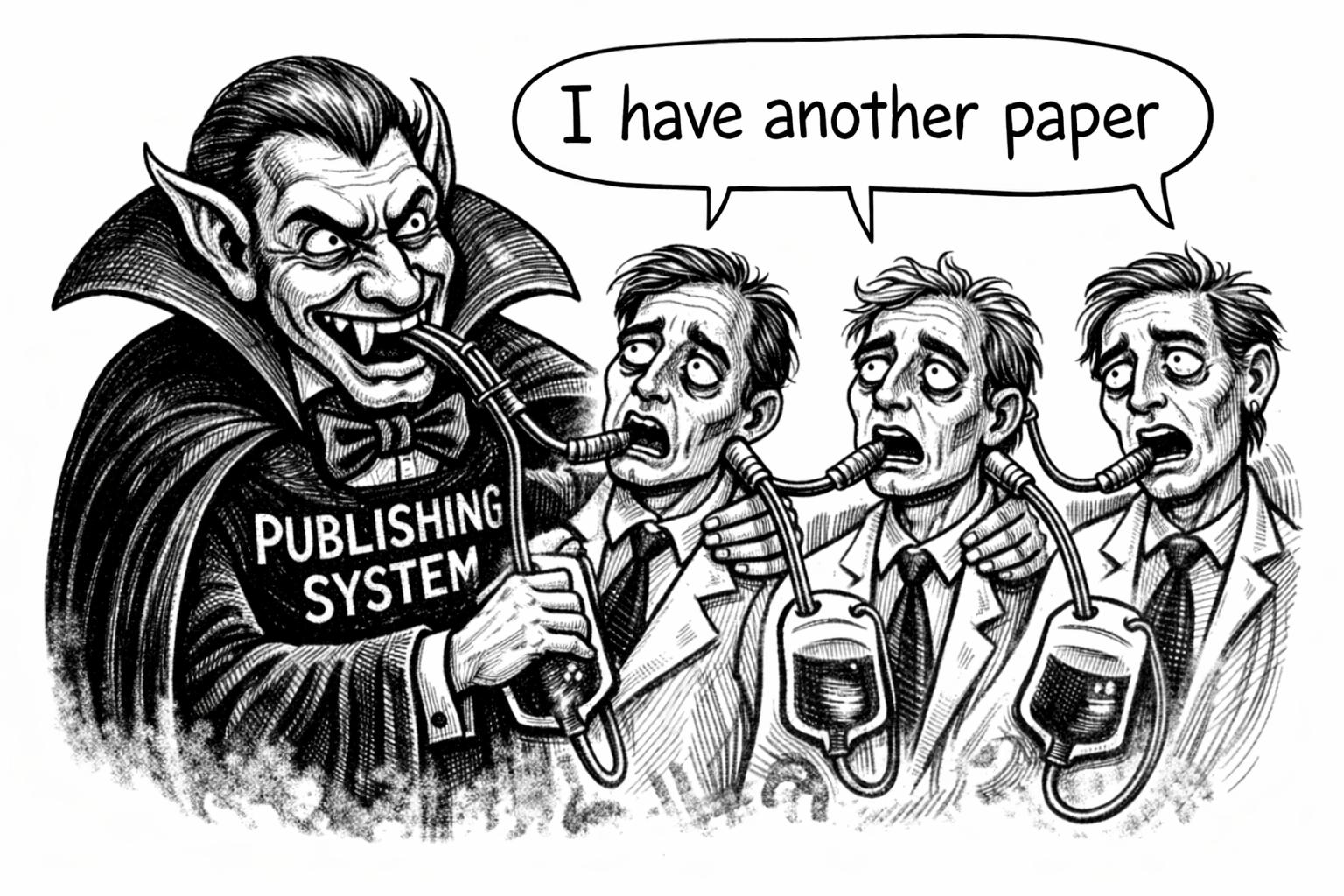
AI-generated image (Dall-E), again
What about the scale of the problem?
- Posted on:
- February 5, 2026
- Length:
- 3 minute read, 579 words
- See Also: